Costs
Part of Dental SEO: signal versus noise, updated for 2027
Which dental SEO agencies survive an interview, not just a ranking page?
Six named dental SEO agencies, what each does, who each one suits, and the interview vetting questions that expose a weak fit before you sign.
What to take away
- No published ranking proves an agency fits your practice; the interview does.
- Six dental SEO agencies appear in the table belowDental Marketing Solutions, ProSites, PBHS and TNT Dental.
- Golden Proportions Marketing and Cardinal Digital Marketing round out the list.
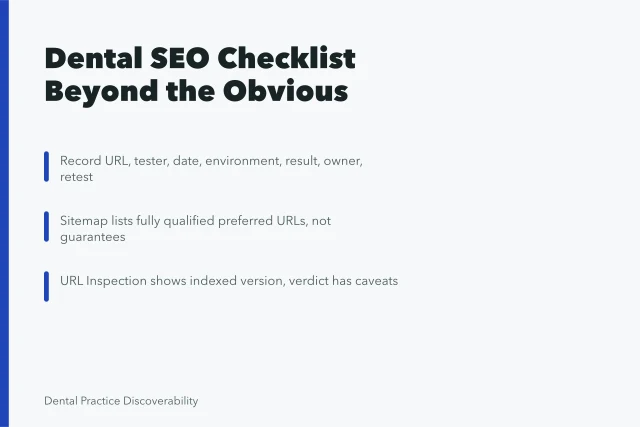
- Ask for the accounts, the change log and the rollback plan before you sign.
- Canadian dental work adds CASL consent records, PIPEDA and PHIPA data flows, and provincial college advertising rules.
- Run a paid pilot on one bounded problem and score the result.
- Keep ownership of your GBP, domain, analytics and patient data.
Six dental SEO agencies worth interviewing
These are real firms with public dental or healthcare client lists. Each prices by quote, so ask for a written scope and a number rather than a rate card.
| Agency | Base | What it does | Suits |
|---|---|---|---|
| Dental Marketing Solutions | Ontario | Dental websites, local SEO and Google Ads; handles CASL consent and PIPEDA data flows | Single-location Ontario practices wanting one vendor |
| ProSites | US, serves Canada | Subscription website platform with hosting, local SEO and reputation tools; monthly billing | Practices that want packaged tools and predictable billing |
| PBHS | US, serves Canada | Dental websites, SEO and a patient education content library | Practices replacing an aging site and wanting content included |
| TNT Dental | US, serves Canada | Dental-only web design, SEO and content | Practices that want a dental-only shop |
| Golden Proportions Marketing | US, serves Canada | Branding, web and campaigns for dental and medical groups | Multi-location groups that need brand work beside search |
| Cardinal Digital Marketing | US, Atlanta | Healthcare SEO and paid media; publishes healthcare case studies | Groups with five-figure monthly marketing budgets |
Dental Marketing Solutions works mainly with Ontario practices and runs site, search and paid ads together. That keeps CASL consent records and PHIPA data flows with one vendor. Ask who handles your account and what the monthly scope covers.
ProSites sells a subscription platform with monthly billing. A practice gets one login and predictable cost, and should confirm what it can export if it leaves.
PBHS and TNT Dental both build dental-only sites and content, so price and turnaround usually decide between them. Ask TNT Dental for the build price and the monthly retainer as separate numbers.
Golden Proportions Marketing takes on branding as well as search. That matters when several locations share one name and one visual identity.
Cardinal Digital Marketing is an Atlanta healthcare agency with published case studies. Its scope fits larger groups and dental service organizations more than a single practice.
Single-location dental SEO retainers typically run $1,000 to $4,000 a month as of 2026. Market size, content volume and link work drive the spread.
A new dental site typically costs $3,000 to $15,000. Page count, booking and payment integrations, photography and the patient education library set the price. Multi-location programs often start near $5,000 a month and climb with each market.
Verify any of them the same way: ask for two client references in your province, the name of the person doing the work, and what happens to your site if you leave.
Interview the provider, not its ranking page
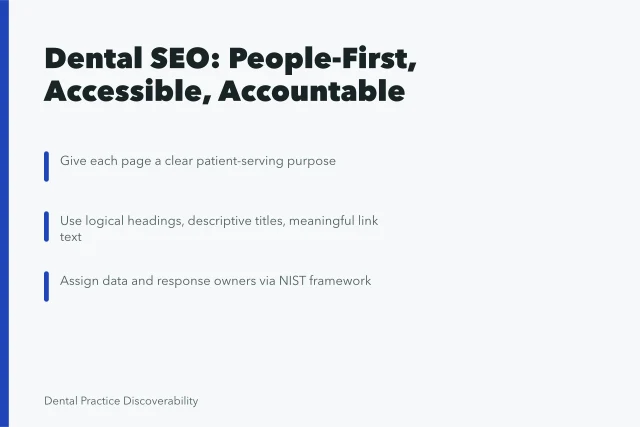
Google's guidance on hiring an SEO says to ask about previous work, methods, timing, measurement and communication. It also says nobody can guarantee a first-place ranking, and that the site owner stays responsible for what a hired firm does.
That last point belongs in the contract. If an agency buys links or posts reviews without consent, the practice carries the exposure, not the agency.
Set a nonnegotiable operating floor
Google's Search Essentials split guidance into technical requirements, spam policies and key practices such as helpful content and crawlable links. They describe search eligibility and dental SEO best practices, not clinical quality and not a promise of indexing.
Nonnegotiable Operating Floor
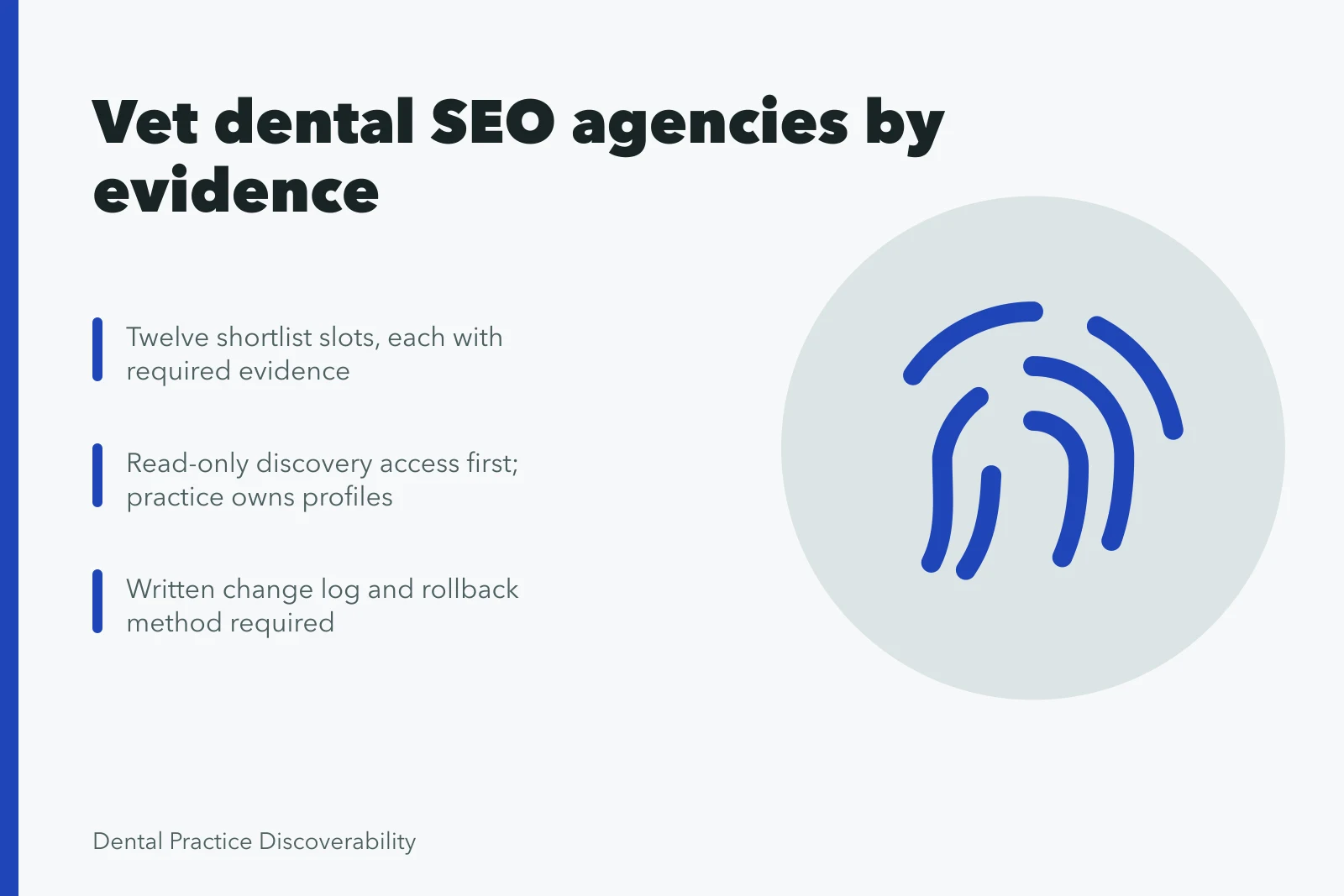
- Read-only discovery access first
- Practice ownership of profiles and properties
- Named page and claim reviewers
- Written change log and rollback method
- No bought links or disguised network sites
- Source-level reports and export rights
- Incident, termination, and deletion procedures
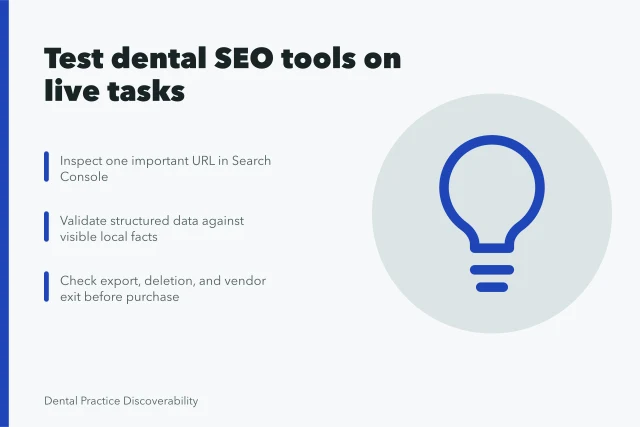
A paid pilot on one bounded problem is the cheapest test. Typical pilot fees run $1,500 to $5,000. Score whether the team found the real cause, protected access, shipped a verifiable change, and measured the patient task you named. Do not expand the contract on a polished presentation.
Audit the published evidence
The FTC advertising substantiation policy requires a reasonable basis before objective claims go out. The FTC guidance on reviews covers fake feedback, selective requests, conditioned incentives and paid placements. Both are US rules; for Canadian advertising, ask your provincial college and dental advertising requirements.
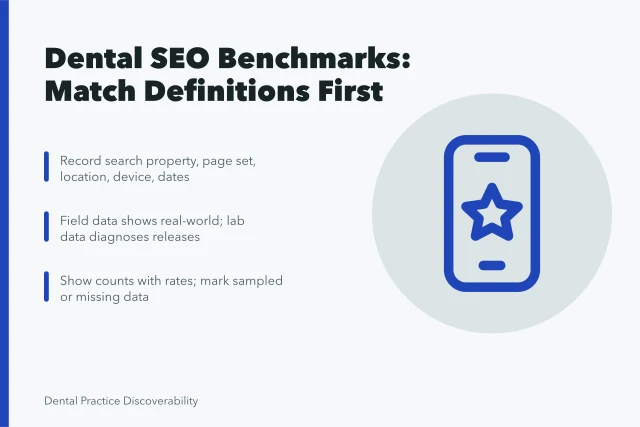
Separate what the agency claims, what clients say, and what you measured. Record the criteria, the commercial relationship, the method and the missing evidence. Reproduce one material claim with your own data before you repeat it.
Common questions
Can an agency pay to be listed here?
No. None of the six paid for inclusion, and a commercial relationship would be disclosed in the table.
What do the six agencies cost?
Single-location dental SEO retainers typically run $1,000 to $4,000 a month as of 2026. Site builds typically run $3,000 to $15,000. Multi-location programs often start near $5,000 a month.
What access should an agency get first?
Read-only access to analytics and Search Console, then time-limited change access through named accounts. Never hand over the domain registrar or the GBP owner login.
How long should a pilot run?
Long enough to finish one defined task and see its evidence, with scope and stop rules agreed first. Four to eight weeks is a workable range for a single service page or a local pack fix.
Who owns the patient data?
The practice does, as the custodian under PIPEDA and, in Ontario, PHIPA. Name your privacy officer and confirm in writing where the data sits and when it is deleted.