Reviews
Calgary dental marketing agencies and the Alberta college rules to check
Calgary dental marketing agencies must follow Alberta dental college advertising standards, PIPA Alberta and Competition Bureau Canada rules. Here is what to ask.
What to take away
- Calgary dental marketing agencies can handle local SEO, paid search, content and reputation work, but the compliance side is yours to check.
- Alberta dental college advertising standards govern how you describe treatment, fees and credentials, and they apply to every ad an agency writes for you.
- PIPA Alberta covers patient information an agency touches, so ask where data lives and what happens when the contract ends.
- Competition Bureau Canada guidance targets misleading claims, fake urgency and unverifiable superlatives in dental ads.
- Calgary municipal licensing, federal privacy law and consumer protection rules all sit around the same campaign.
- A shortlist process built on written answers beats a pitch meeting every time.
What Calgary dental marketing agencies actually offer
Calgary is a fast-growing city with a crowded dental market, and corporate-owned practices compete hard for the same search results. That shapes what agencies here sell. Most bundle local SEO, Google Ads management, review generation, website builds, content and social posting.
Local SEO matters more than in smaller markets. Neighbourhood-level searches, map pack placement and clinic hours all influence whether a patient in Kensington or Mahogany books with you or the practice two blocks away.
Paid search is the other big line item. Agencies bid on treatment terms, manage call tracking and report on cost per booked appointment rather than cost per click. Ask what they count as a conversion.
Content and reputation work often sit in the same retainer. If you are comparing specialists rather than full-service shops, look at dental practice marketing budget and hipaa compliant dental marketing on their own merits, because the skills differ.
Reputation matters in a market where a single wave of negative reviews can dent new patient volume. Agencies that manage reviews should tell you how they handle a complaint that is clinically accurate but publicly damaging.
What agencies cannot do is decide what you are allowed to say. That sits with your college, the privacy regulator and the Competition Bureau. The rest of this article covers the questions that separate a careful agency from a fast one.
Questions about Alberta dental college advertising standards
Alberta regulates dentists through its provincial dental college, and the college sets advertising standards that bind registrants. The standards typically cover truthfulness, comparisons with other practitioners, testimonials, fee advertising and the use of titles.
Ask any agency one direct question: which of your team has read the Alberta dental college advertising standards, and when? A vague answer is a warning.
Then ask how they handle superlatives. Words like best, leading or painless invite scrutiny, and the college is not the only body watching. Get the agency to show you two past dental campaigns and point out where they softened a claim.
Testimonials and before-and-after images are another trap. Ask who obtains patient consent, how it is documented and where the images are stored. If the agency says it handles consent, get that in writing.
Fee advertising deserves its own question. Ask how the agency presents starting prices, treatment bundles and limited-time offers, and whether they will pull an ad on your instruction without argument.
Finally, ask about review response. A reply to a negative review is advertising in practice, and it should follow the same standards as a paid ad. If the agency writes replies without your sign-off, that is a risk you own.
PIPA Alberta and patient data in agency work
Alberta has its own private-sector privacy law, PIPA, and it applies to how a dental practice collects, uses and discloses personal information. Patient records, appointment details and marketing lists all fall inside it.
Federal privacy law also applies to commercial activity across Canada, and the privacy commissioner publishes an overview of how federal and provincial statutes fit together. Check the Privacy laws in Canada guidance before you sign anything that moves patient data.
The practical questions are simple. Where does the agency store data, in Canada or elsewhere? Who inside the agency can see it? What happens to it when the contract ends?
Marketing consent is separate from treatment consent. A patient who agrees to treatment has not agreed to a newsletter. Ask how the agency segments its lists and whether it can prove consent for every address it emails.
Email marketing also falls under Canadian anti-spam law, which requires consent and a working unsubscribe. Ask the agency to show you the unsubscribe flow on a live campaign.
If an agency wants access to your practice management system, slow down. Ask for read-only access where possible, a named account holder and a written deletion process when the relationship ends.
Competition Bureau Canada guidance for dental claims
Competition Bureau Canada enforces rules against misleading advertising, and dental marketing is squarely in scope. The bureau cares about impressions, not intentions, so a claim that leaves the wrong impression can be a problem even if it is technically true.
Ask the agency how it substantiates claims. If an ad says a treatment is faster, cheaper or more comfortable, what evidence sits behind it? "Everyone says that" is not an answer.
The same applies to urgency. Countdown timers, limited slots and expiring discounts need to reflect something real. Fake scarcity is a common problem in dental ads and an easy target.
Pricing claims need care too. A headline price that excludes the exam, the imaging or the lab fee misleads patients. Consumer protection bodies publish guidance on fair dealing that applies here, and the Office of Consumer Affairs is a useful starting point for what fair dealing means in practice.
Ask the agency who reviews ad copy before it runs. If the answer is nobody, you are the reviewer, and you carry the consequences. A written approval step costs little and prevents most problems.
Calgary municipal licensing context for practices and agencies
The City of Calgary licenses businesses, and dental practices need the right licence to operate. If an agency claims a Calgary address, check that it is licensed too.
The city's Business & local economy pages set out licence categories, renewal cycles and the rules for home-based and commercial operations. A practice running a second location needs to think about this before the signage goes up.
Municipal rules also touch signage, sandwich boards and some outdoor advertising. If an agency proposes a campaign that includes physical signage near your clinic, ask who checks the permit requirements.
Business registration and tax basics sit with the federal government as well. The Starting a business guide covers registration, records and the obligations that apply to marketing spend, including how expenses are treated for tax purposes.
Ask the agency whether it is incorporated in Alberta, who its registered director is, and whether it carries liability insurance. These are ordinary questions in any supplier relationship.
For practices collecting personal information for marketing, the privacy commissioner publishes plain-language Privacy for businesses guidance that covers consent, retention and accountability. It is short, and it gives you a checklist to hold an agency against.
A shortlist process for Calgary dental marketing agencies
Move from a long list to a shortlist in five steps, and keep everything in writing.
- Write down what you want the campaign to produce, whether that is booked consultations, new patients or reactivated lapsed patients.
- Collect eight to ten Calgary agencies, including at least two that work only with dental clients and two generalist local firms.
- Send the same written questions to all of them, including the compliance questions above, and set a deadline for replies.
- Score the replies before any call. Agencies that dodge a question in writing will dodge it on a call too.
- Interview the top three, ask each to walk through a real campaign, and check two references by phone.
Use this checklist during the interviews.
- The agency can name the Alberta dental college advertising standards and describe how they shape copy.
- It explains how PIPA Alberta applies to patient data in its tools and subcontractors.
- It shows a written approval step before any ad, email or review reply goes live.
- It can prove consent for every email address on a marketing list.
- It names who owns the website, the ad accounts and the content when the contract ends.
- It provides a Calgary business licence number and liability insurance details.
- It gives you two dental references you can call without it sitting in.
Two more things belong in the contract. First, a clause that lets you pull any ad immediately if the college raises a concern. Second, a data deletion schedule with a fixed number of days after termination.
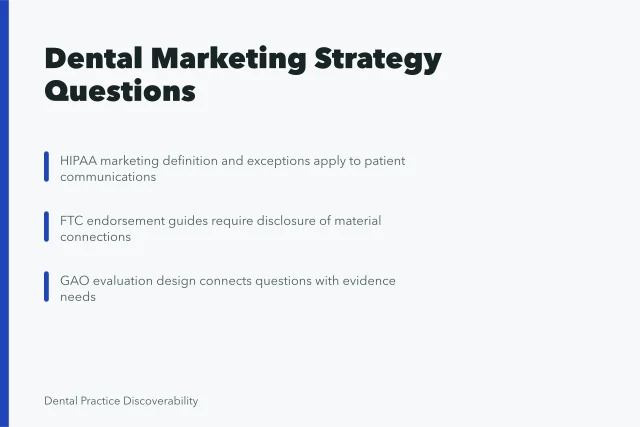
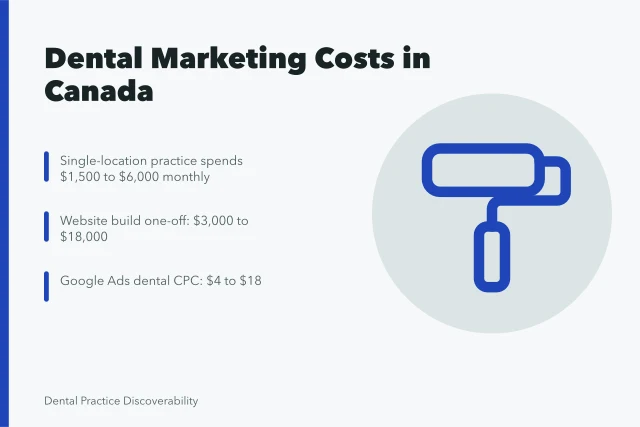
If you are still weighing options, our common dental marketing strategy questions piece separates what is regulated from what is merely customary. And if you want to see how the cost of dental marketing canada shapes the terms and claims in an ad, that comparison is worth an hour before you sign.
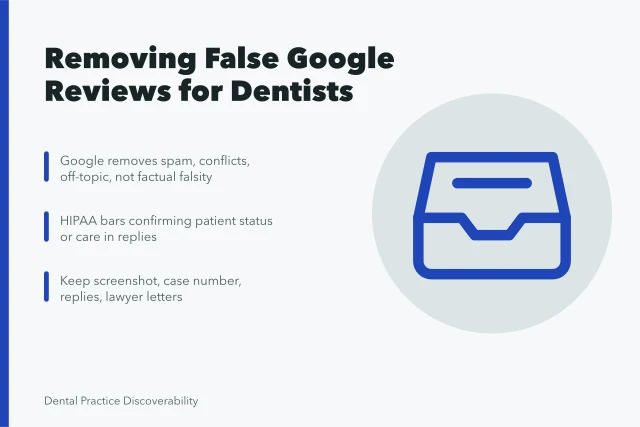
For reputation-heavy campaigns, dental advertising deserves its own shortlist, because review work raises consent and privacy questions that general SEO retainers often miss.
Common questions
Do Calgary dental marketing agencies need to follow the Alberta dental college advertising standards? The standards bind the dentist, not the agency. But anything the agency publishes on your behalf is your advertising, so you carry the responsibility either way.
Does PIPA Alberta apply to an agency that only runs Google Ads? It can. If the agency handles conversion tracking, call recordings or patient lists, personal information is in play, and PIPA Alberta obligations follow that data.
What does Competition Bureau Canada look at in dental ads? Mainly misleading impressions: unsubstantiated superlatives, fake urgency, and prices that hide mandatory fees. The bureau assesses how an ordinary patient would read the ad.
Do I need a Calgary business licence for marketing activity? Your practice needs the licence that matches how it operates. If an agency claims a Calgary office, confirming its licence is a reasonable supplier check.
How long should a shortlist process take? Four to six weeks is realistic if you send written questions first and interview three firms. Rushing it usually means skipping reference calls, which is where problems surface.